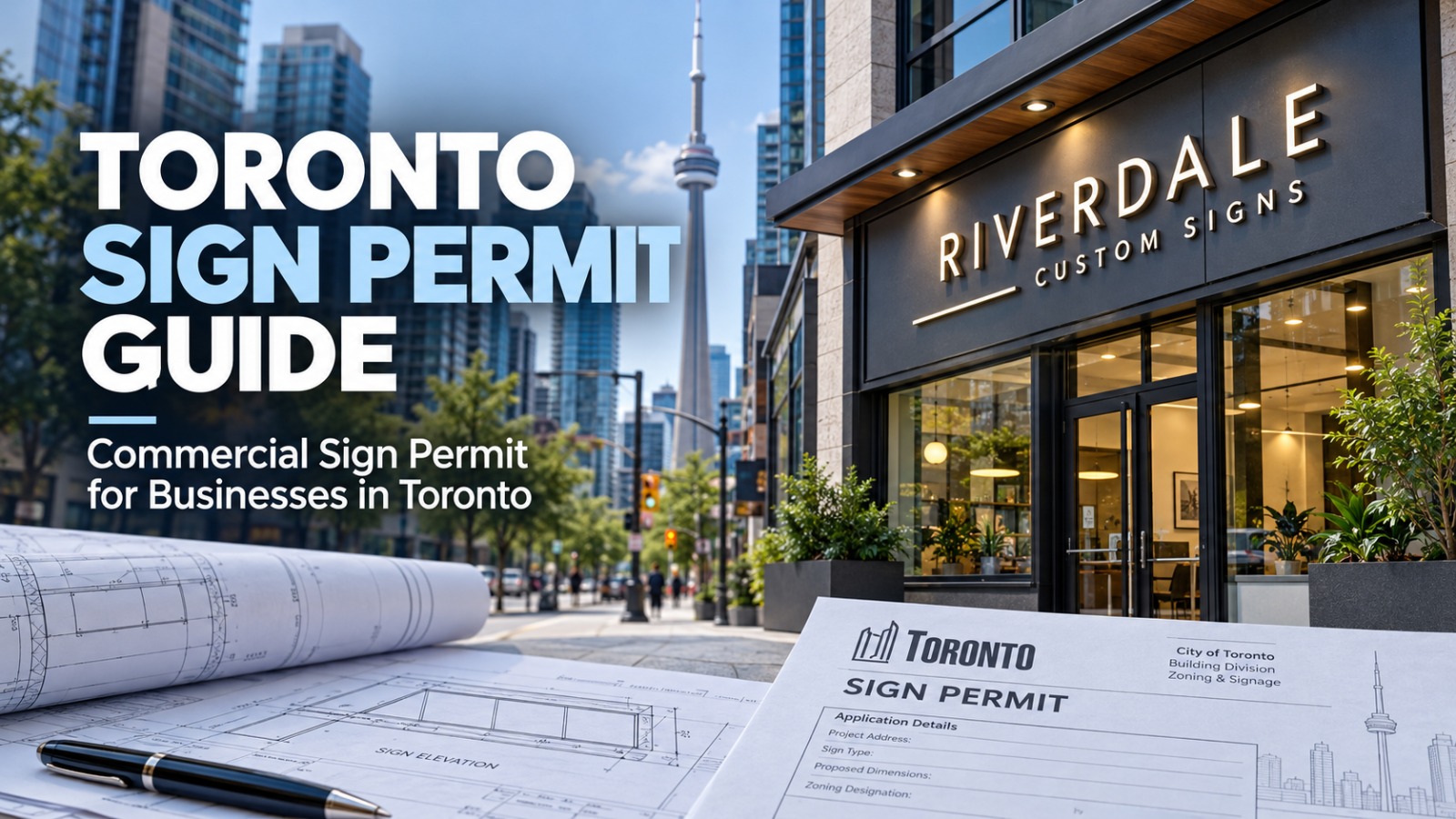
Commercial Sign Permits in Toronto: What Business Owners Should Know
If you’re opening a new business, renovating your storefront, or updating your existing signage, there’s more to consider than choosing the right design. In Toronto, certain commercial signs require permits and must follow the City’s sign regulations.
Understanding the requirements before your sign is manufactured can help you avoid unnecessary delays, additional costs, and installation problems.
Do You Need a Sign Permit in Toronto?
The City of Toronto regulates commercial signs through its Sign By-law and permit process. A sign permit may be required depending on the type, size, location, and purpose of your sign.
For example, a First Party Sign identifies a business or service located at the property where the sign is installed. A Third Party Sign advertises a business or service that is not located at that property.
Most businesses installing permanent exterior signage should check the applicable requirements before moving forward with fabrication or installation.
What Types of Commercial Signs May Require a Permit?
Toronto businesses use many different types of signage to attract customers and identify their locations. Depending on the specific design and property, permit requirements may apply to signs such as:
- Storefront and wall signs
- Building signs
- Ground signs
- Projecting or blade signs
- Illuminated signs
- Roof signs
- Other permanent commercial signs
If you’re planning a new storefront sign, explore custom signs in Toronto to see how your business signage can be designed around your brand, property, and visibility requirements.
First Party vs. Third Party Signs
One of the first things Toronto business owners should understand is the difference between First Party and Third Party signage.
First Party Signs
A First Party Sign advertises or identifies a business, service, or activity located at the property where the sign is installed. A typical storefront sign displaying your company’s name and logo would generally fall into this category.
Third Party Signs
A Third Party Sign advertises a business, product, or service that is not located at the property. These signs have separate requirements and approval considerations.
Knowing which category applies to your sign can help you determine which permit process you need to follow.
What Information Is Needed for a Sign Permit?
A sign permit application requires information about the proposed sign and its relationship to the property.
Depending on the type of sign, documentation may include:
- Site plans
- Sign elevations
- Sign dimensions
- Cross-section drawings
- Structural information
- Mounting and attachment details
- Illumination details
- Property information
- Existing and proposed sign locations
The drawings should clearly show where the sign will be installed, its dimensions, how it will be attached, and how it relates to the building and property.

Having accurate measurements and design information prepared before submitting an application can make the process easier and reduce the risk of corrections.
What About Storefront and Projecting Signs?
Storefront signage is one of the most common ways businesses identify themselves to customers. However, the size, location, projection, illumination, and attachment method can affect the applicable requirements.
Projecting or blade signs extend outward from a building and are often used by restaurants, retail stores, professional offices, and other businesses to improve visibility from sidewalks and streets.
If you’re considering a projecting or hanging sign, the design should take the building, pedestrian area, property line, and surrounding environment into account.
How Much Does a Sign Permit Cost in Toronto?
Permit fees depend on the type and size of the proposed sign.
The City of Toronto’s current 2026 First Party Sign Permit fee information includes fees calculated according to sign area, with minimum fees applying to several sign categories.
Because municipal fees and requirements can change, businesses should confirm the current fee schedule with the City of Toronto before submitting an application.
The permit cost is only one part of the overall signage budget. Businesses should also consider design, materials, fabrication, lighting, installation, maintenance, and any structural requirements.
Can You Install a Sign Without a Permit?
Not every sign requires the same type of approval.
Toronto has certain signs that may not require a permit when they meet specific conditions. However, being exempt from a permit does not necessarily mean a sign is exempt from all municipal regulations.
For example, certain temporary or service-related signs may have specific conditions, while other temporary signs, such as A-frame signs, have their own permit requirements.
Rather than assuming that a sign is exempt, it’s best to confirm the requirements for your particular sign and property.
Why Professional Sign Planning Matters
A commercial sign is a combination of design, materials, structure, installation, and local requirements.
Professional planning can help you consider important factors such as:
- Sign size and proportions
- Building structure
- Mounting location
- Visibility from the street
- Materials and durability
- Illumination
- Installation requirements
- Permit documentation
If you’re planning a new exterior sign, Signs Depot Toronto provides professional sign installation in Toronto and can help take your project from design and preparation through installation.

Planning a Commercial Sign in Toronto?
A successful signage project starts with proper planning. Before ordering a sign, make sure you understand the requirements that apply to your property and proposed sign.
Whether you’re opening a new business, renovating a storefront, or updating an existing sign, choosing the right design and installation approach can help create a professional appearance while avoiding preventable problems.
Signs Depot Toronto offers a range of custom signage solutions in Toronto for businesses looking to improve their storefront and exterior visibility.
You can also contact Signs Depot Toronto to discuss your signage requirements and project.
Important: Sign permit requirements can vary depending on the sign type, property, location, and other factors. Always check the latest requirements with the City of Toronto before fabrication or installation.