
Choosing the right signage company is an important decision when you are opening a new business location, updating an existing storefront, or developing a new brand identity. Your business sign is more than a decorative feature. It helps customers identify your location, communicates your brand, and contributes to the overall appearance of your property.
For Toronto businesses, finding the best signage company in Toronto means looking beyond a basic price comparison. You need a signage partner that understands design, materials, visibility, customization, and the practical requirements of installing signage at a commercial property.
Whether you need a storefront sign, outdoor business sign, illuminated lettering, or a fully customized exterior solution, several factors can help you choose the right provider.
Why Choosing the Right Signage Company Matters
A business sign can remain visible at your location for years. If the design is difficult to read, the materials are unsuitable, or the sign does not properly represent your brand, replacing it can create additional costs and inconvenience.
Working with an experienced signage provider can help you make better decisions before production begins.
A professional approach should consider:
- Your business and target customers
- Brand identity
- Sign location
- Viewing distance
- Building architecture
- Sign dimensions
- Material requirements
- Lighting needs
- Installation considerations
- Long-term maintenance
This creates a more complete signage strategy rather than simply ordering a sign.
1. Look for Custom Signage Capabilities
Every business has different requirements. A restaurant may want a highly visible illuminated storefront sign, while a professional office might prefer understated dimensional lettering.
A signage company should be able to adapt its solutions to different business types and locations.
Custom signage in Toronto can be designed around your logo, colours, typography, dimensions, materials, and available installation space. This gives businesses more control over how their physical location represents their brand.
2. Review the Available Signage Options
A strong signage provider should understand different types of commercial signage and help you determine which one fits your needs.
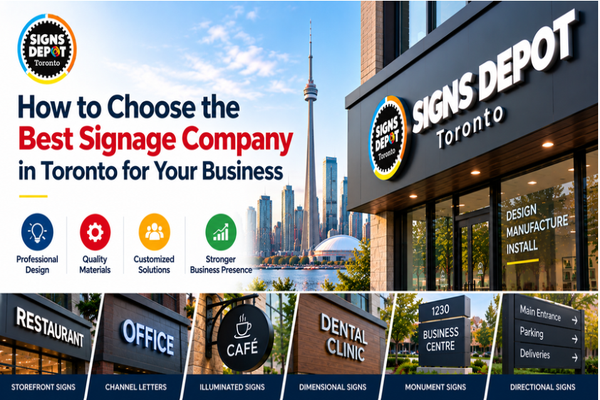
Depending on the application, businesses may consider:
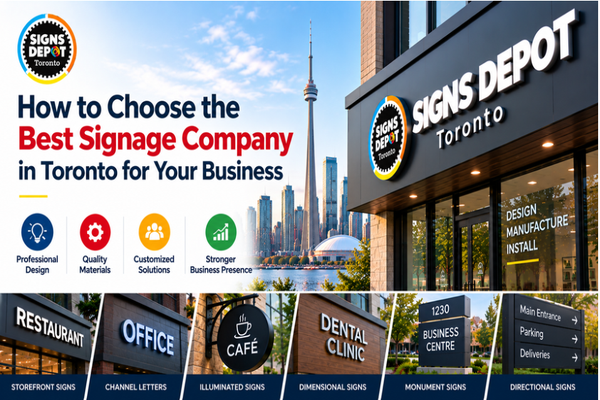
Storefront Signs
Designed to identify a business directly on its building or storefront.
Channel Letters
Individual letters that can create a dimensional and professional appearance, with optional illumination depending on the design.
Illuminated Signs
Useful for businesses that want increased visibility during evening hours or low-light conditions.
Dimensional Lettering
Raised letters and logos can add depth and create a clean exterior appearance.
Outdoor Business Signs
Exterior signs can be used for identification, branding, promotions, directions, or other business communication.
Custom Exterior Signs
Businesses with unique branding or property requirements can explore completely customized signage solutions.
Understanding these options allows you to make a decision based on your business rather than simply choosing the first available product.
3. Evaluate Design and Branding
Your sign should look like your business.
A professional signage company should consider your existing visual identity, including your logo, colour palette, fonts, and overall brand style.
Consistency matters because customers may encounter your brand in multiple places. They might see your website, social media profiles, advertising, vehicles, printed materials, and storefront before interacting with your business.
Using a consistent visual identity across these touchpoints can support stronger brand recognition.
4. Consider Material Quality
Outdoor signs are exposed to environmental conditions, so material selection should be based on the intended application.
Different materials can provide different visual finishes and performance characteristics. The right option depends on factors such as location, sign dimensions, design, exposure, maintenance requirements, and desired appearance.
When discussing a signage project, ask the provider why a particular material is recommended for your application.
A knowledgeable sign shop in Toronto should be able to explain your options in clear, practical terms.
5. Think About Visibility
A sign needs to be seen before it can communicate anything.
Consider how customers approach your location. Are they driving, walking, or entering a commercial plaza? How far away will they first see the sign?
Letter size, contrast, lighting, placement, and surrounding structures can all affect visibility.
For example, a sign designed for a busy road may require different considerations than signage located directly beside a pedestrian entrance.
6. Ask About Installation Requirements
The design of a sign and the way it is installed are closely connected.
The building surface, mounting location, electrical requirements, available space, and surrounding architecture can influence the final signage solution.
Discuss installation requirements early in the process. This can help prevent design changes or unexpected complications later.
7. Consider Long-Term Value
When comparing signage companies, avoid focusing only on the lowest initial price.
A business sign is an investment in your physical brand presence. Design quality, appropriate materials, installation, visibility, and expected service life can all influence its overall value.
A slightly different upfront investment may make sense if the resulting signage better meets your business requirements and provides a more effective long-term solution.
Why Signs Depot Toronto?
Businesses searching for the best signage company in Toronto need a provider that can combine creativity with practical signage knowledge.
Signs Depot Toronto offers customized signage solutions for businesses looking to establish or improve their physical brand presence. By considering your business identity, location, signage purpose, materials, visibility, and installation requirements, the signage process can be tailored to your specific needs.
Whether you are launching a new storefront or replacing outdated exterior signage, taking a customized approach can help create a sign that fits your business rather than relying on a generic design.
Frequently Asked Questions
How do I choose the best signage company in Toronto?
Look for a company with experience in commercial signage, customization capabilities, appropriate material options, professional design guidance, and an understanding of installation and visibility requirements.
What should I ask a signage company before ordering?
Ask about available signage types, materials, customization, design options, installation requirements, expected maintenance, and how the proposed solution will work with your location and brand.
What is the most effective business sign?
There is no single sign that works best for every business. Storefront signs, illuminated signs, channel letters, dimensional lettering, and custom exterior signs may each be appropriate depending on the location and business objectives.
Is custom signage worth the investment?
Custom signage can provide a more consistent representation of your brand and can be designed around your property’s specific requirements. The value depends on the quality, application, visibility, durability, and long-term usefulness of the signage.
Choose a Signage Partner That Understands Your Business
The right signage company should do more than manufacture a sign. It should help you make informed decisions about design, materials, visibility, branding, and installation.
When searching for the best signage company in Toronto, consider how well the provider understands your business and whether its signage solutions can be adapted to your specific location and goals.
With a customized approach to commercial signage, Signs Depot Toronto can help businesses create professional exterior signage designed to improve visibility and represent their brand effectively.